
Low-light practice on a laser range
By Asset Firearms instructors. 14 November 2026.
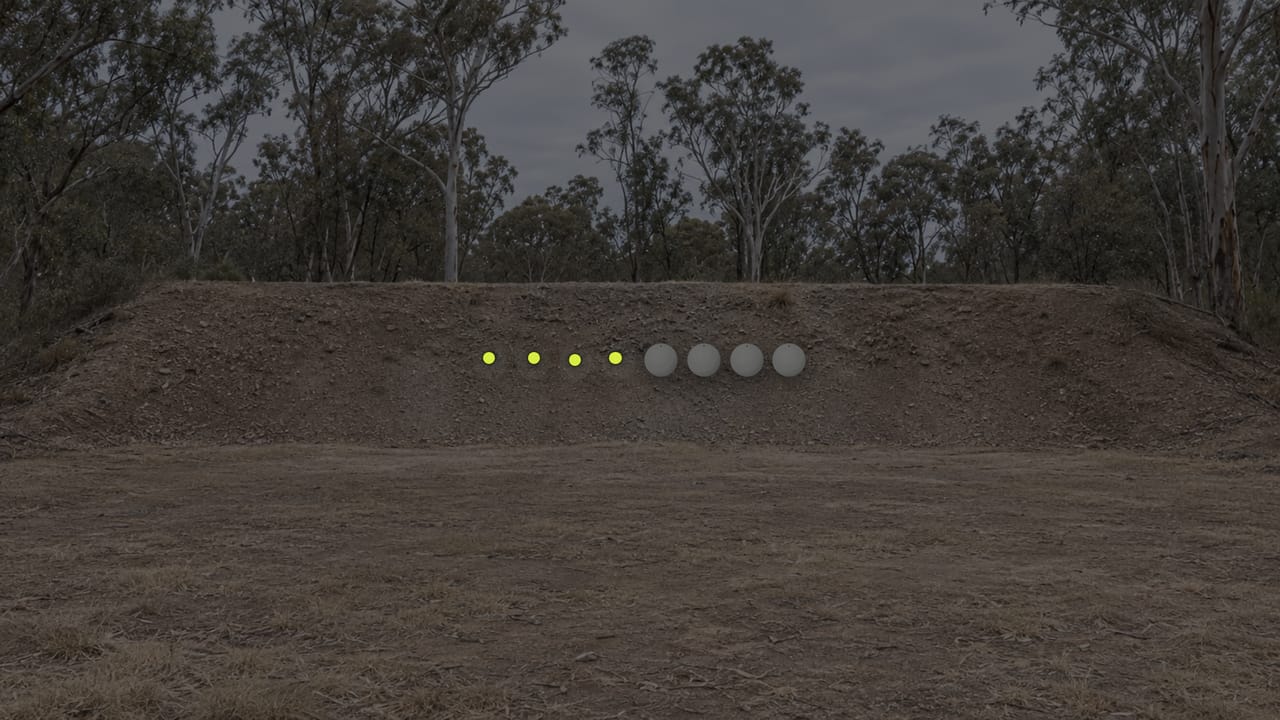
Most shooters do almost all of their practice in good light. The range is bright, the target is clear and the front sight sits crisply on it. Then the light drops and everything that felt automatic starts to fall apart. Low-light practice is how you find that out in a calm, safe room instead of somewhere it matters.
What changes when the light goes
Three things usually go wrong first.
- Finding the target. In poor light the eyes take longer to pick out a shape. Shooters who rush the first shot often fire at where they expect the target to be, not where it is.
- Finding the sights. Iron sights lose contrast against a dark background. Many shooters end up looking past the sights at the target, and the group opens up.
- Holding the pace. Some shooters slow right down and freeze. Others speed up because the dark feels urgent. Neither helps.
It needs repetitions, done slowly at first, with someone watching.
Lighting on the Digital Range projected range
In projected mode the instructor sets the lighting for the scene from the setup bar. There are four levels: Normal, Dim, Dark and Strobe. Each drill has its own default, and the instructor can leave it there or change it for the session.
- Dim darkens the backdrop and targets, but the target shapes are still easy to read. It is a sensible first step for any shooter new to low light.
- Dark takes most of the light out of the scene. Targets are there, but you have to look for them.
- Strobe lights the range only in short flashes, the way emergency or vehicle lights do.
Because lighting is a setting rather than part of the drill, you can take a drill a shooter already knows well, such as a slow-fire accuracy drill from the drill library, and run it in Dim before moving on.
Low Light Accuracy
Low Light Accuracy is the dedicated drill for this. It is five rounds on a single metric silhouette target, set in a warehouse scene with the lighting on Dark by default.
The start beep comes after a random delay of between one and a half and four seconds, so the shooter cannot anticipate it. Once the timer starts, the shooter has up to 45 seconds to put five rounds on the target. That is plenty of time. The drill description says it plainly: find the target, then the sights, before each shot.
Coach it as an accuracy drill. Look at the zones on the results panel, not the total time. If the hits are scattered, slow the shooter down. If they are tight but slow, that is a good result for a first session in the dark.
Strobe Transitions
Strobe Transitions is harder. Three IPSC-style targets stand in a row, and the shooter puts two rounds on each, working from left to right, while the range is lit only in flashes. Each target allows up to 20 seconds before the drill moves on.
Strobe light breaks up the picture. The shooter sees the target for an instant, then darkness, then the target again. The temptation is to fire on every flash. Good shooters learn to use the flashes to confirm the sight picture and press only when it is right.
The splits between targets tell you most of what you need. A long split on the transition usually means the shooter lost the next target in the dark. Talk about where their eyes go first. More on that in par times, splits and first-shot time.
A simple low-light progression
- Run a familiar accuracy drill in Normal light to set a baseline.
- Run the same drill in Dim.
- Run Low Light Accuracy on its default Dark setting.
- Once the groups hold together, try Strobe Transitions.
Write the results down if the shooter wants to compare them later. Digital Range keeps no shooter data, so the results panel clears when the app closes.
Keep it safe in the dark
Low light makes safe handling harder, not optional. Use laser training firearms only, with no live firearm or ammunition anywhere near the setup. Keep the finger off the trigger until the sights are on target, and keep the muzzle pointed in a safe direction the whole time. Keep enough light for the instructor to see the shooter's hands. Our article on safe handling with laser training firearms covers the basics.
Laser practice builds the habits, but it does not replace supervised live fire. If you want to take low-light skills to a real range, talk to your club about what is permitted under its range standing orders and your state's rules.