
Safe handling with laser training firearms
By Asset Firearms instructors. 14 November 2026.
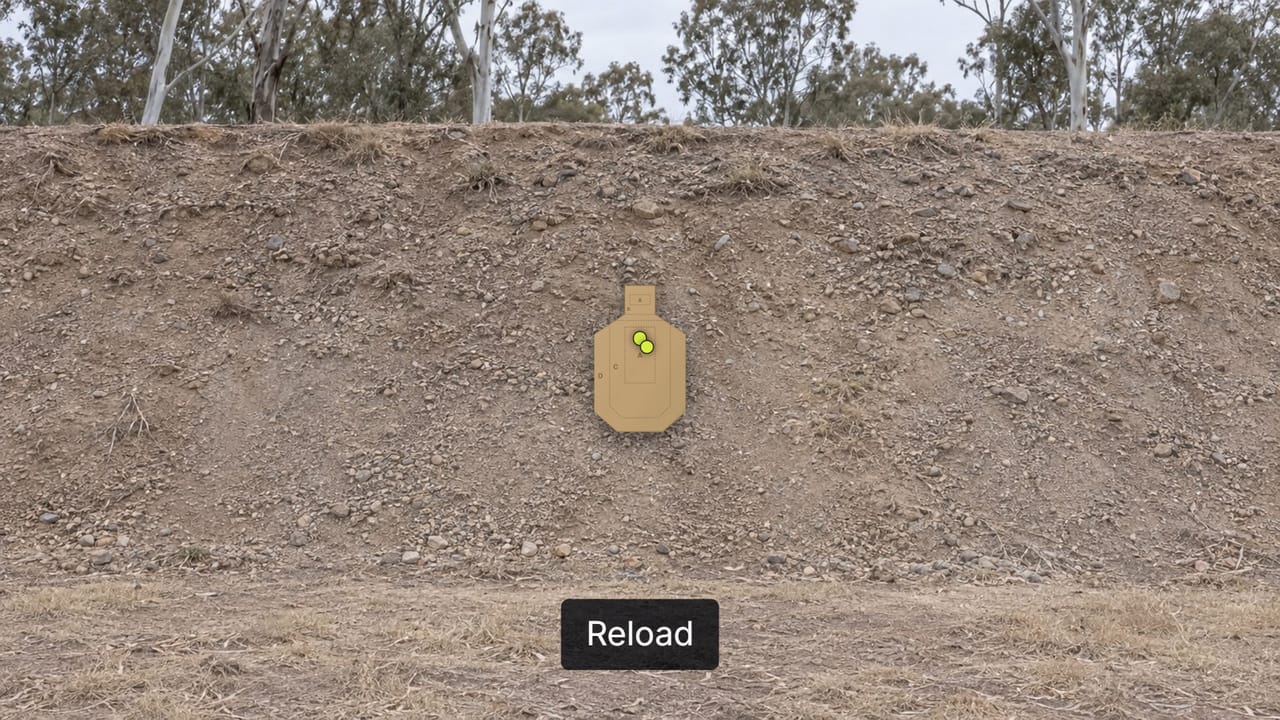
A laser training firearm cannot fire a round. That is the whole point of it. It is also the reason some people get careless with one, and careless habits on a laser range travel straight back to the live range.
Treat the laser trainer the way you would treat the real thing. The habits you build here are the habits you will have under pressure later.
Laser trainers only, nothing else in the room
The single most important rule is simple: no live firearm and no ammunition anywhere near the training setup.
- Before a session, the instructor confirms that every item on the line is a laser training firearm.
- Live firearms and ammunition stay out of the room, not just off the table.
- If a member arrives straight from the range, their firearms and ammunition are secured elsewhere before they come in.
- If anyone is unsure whether an item is a trainer, stop and check it before going any further.
Digital Range is built for laser training firearms only, used under a qualified instructor.
Laser training firearms are still subject to your state's laws and your club's protocols. Check both before you buy one, carry one or run a session.
The handling rules still apply
The usual safe handling rules do not switch off because the trainer cannot fire.
- Muzzle in a safe direction. Point it at the target area and nowhere else. Never at a person, including yourself, and never across the people waiting their turn.
- Finger off the trigger until you are on target. Index your finger along the frame. On a laser range a premature press shows up as a stray hit, so the screen will tell you if you get this wrong.
- Treat it as if it were loaded. Hand it over the way your club teaches you to hand over a firearm.
- Know your target and what is around it. On a laser range that means the screen or the paper, and the people near it.
Care with the beam
Training lasers are made for this job, but no laser belongs in anyone's eyes. Keep the muzzle on the target area, never look down the barrel at the emitter, and make sure nobody walks between the shooter and the targets while the line is live.
Setting up the room
A good layout prevents most problems before they start.
- Put the shooting line on one side of the room and the targets on the other, with nothing in between.
- Keep waiting members behind the shooter, never beside the targets.
- Mark the line on the floor so everyone knows where it is.
- Keep walkways clear of cables for the projector, camera or tablet.
- If you run two lanes side by side on the projected range, with red laser on the left and green on the right, give each shooter their own space and a clear muzzle direction.
The hardware section covers what goes where for projected and paper setups.
Running the line
Laser training sessions should be instructor-led and run under your club's safety rules and range standing orders. A routine I use on club nights:
- The instructor calls the shooter to the line and confirms the trainer.
- The shooter takes a ready position, muzzle at the target area, finger off the trigger.
- The instructor checks the area in front of the line is clear and starts the drill.
- After the run, the shooter takes their finger off the trigger, keeps the muzzle on the target area and waits to be told to leave the line.
- The trainer is handed to the next shooter, or set down muzzle towards the targets.
Digital Range helps keep the line moving: N for the next shooter, R to reset and Space to start. That saves time, but it should never rush a handover. The instructor decides when the next shooter is ready.
Where laser training fits
Laser practice is a safe way to rehearse handling, presentation and trigger control as often as you like. It supplements supervised live-fire practice and never replaces it. It does not qualify anyone for anything either. For supervised shooting, contact Asset Firearm and Crossbow Club. For nationally recognised training, Asset College runs firearms courses. And for ideas on what to do once the line is safe, try the 30 minute club training night routine.