
A 30 minute practice routine for club training nights
By Asset Firearms instructors. 14 November 2026.
A training night works best with a plan. Without one, members shoot whatever looks fun, the line bunches up, and nobody leaves having improved anything in particular.
This 30 minute routine moves from slow, careful shooting to speed and then to multiple targets. Every drill in it runs in both projected and paper mode, so it works with whatever setup your club has. Adjust the times to suit the size of the group.
Before you start (5 minutes)
Run the safety brief every time, even with regulars:
- Laser training firearms only. Check that no live firearm or ammunition is anywhere near the setup.
- Finger off the trigger until on target.
- Muzzle in a safe direction at all times, including when walking to and from the line.
- Your club's safety rules and range standing orders apply in full.
Then check the setup. In projected mode, confirm the calibration still lines up. In paper mode, fire a test shot to confirm it lands on the right target. Choose the laser colour to match the trainers you are using.
Block one: accuracy (8 minutes)
Start slow. The aim is a clean trigger press, not a fast time.
- Single Target: Slow Fire. Three deliberate rounds on a precision bullseye from 7 metres. There is no start beep and no par time, so the shooter takes each shot when ready.
- Five-Shot Group. Five rounds on a bullseye from 10 metres. Look at the spread, not just the score. A tight group off centre tells you something different from a scattered one.
Use the review after each run to talk through where the shots went. If a group sits consistently to one side, have a coach watch the next run before anyone changes their grip or press. The article on reading your shot group covers what to look for.
Block two: speed (8 minutes)
Now add the clock.
- Bill Drill. Six rounds on a single target as fast as possible, on the beep, from 7 metres. Par is 2.5 seconds. The beep comes after a random wait, so the shooter cannot anticipate it.
- Mozambique. Two rounds to the body and one to the head, on the beep, with a 2 second par.
Read the splits. If the first shot is quick but later shots are wide, the shooter is outrunning their sights. Slow down until the hits come back, then build speed again. Hits come before time.
Block three: transitions (6 minutes)
Finish with more than one target.
- Three Target Transitions. One round on each of three targets, left to right, with a 3.5 second par. Drive the eyes to the next target first, then bring the sights.
- El Presidente. For more experienced members: three targets, two rounds each, a reload, then two rounds each again. Twelve rounds in total, with a 10 second par from 10 metres.
Close out (3 minutes)
The session board ranks finished runs for the current drill, which gives the group something to aim for on the last few runs. Press N for the next shooter, R to reset and Space to start, so changeovers take seconds.
Digital Range keeps no shooter data, so nothing is saved when the app closes. Members who want to track their progress should write their own times and scores down before they leave.
Running more people
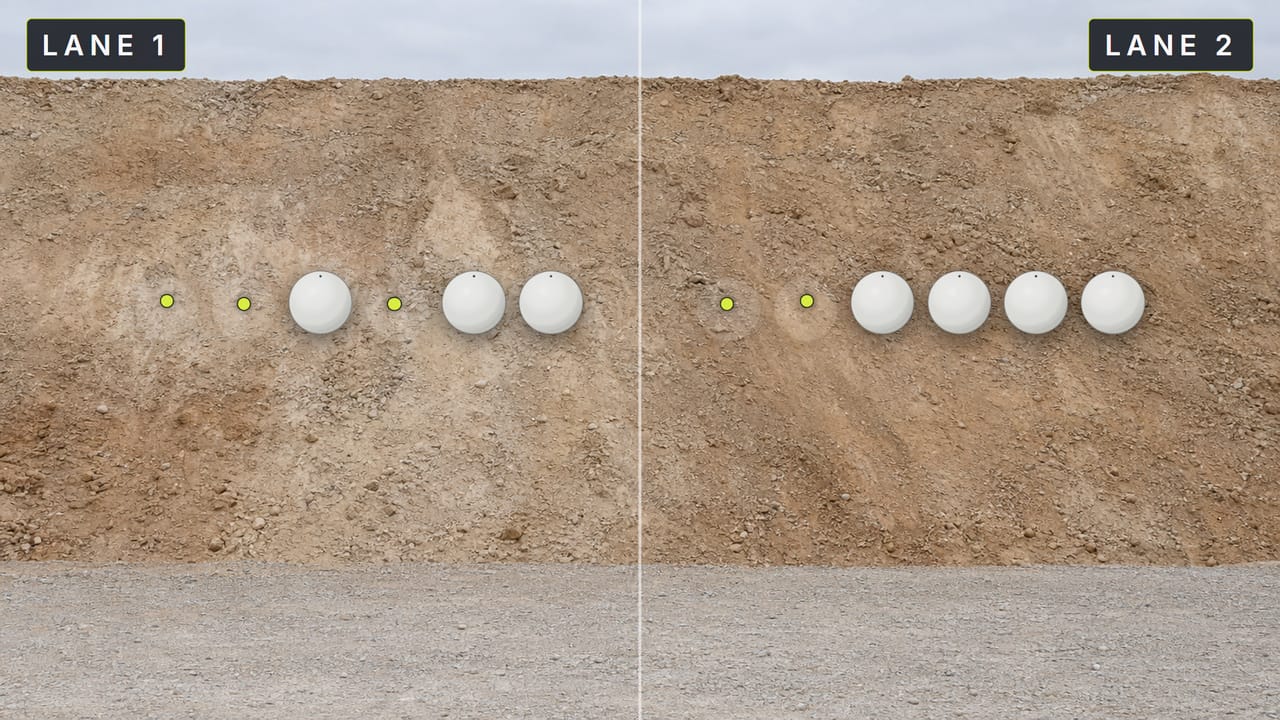
With a large group on the projected range, use two lanes. Two shooters stand side by side, red laser on the left and green on the right, and each is scored separately from the same start beep. That halves the wait and adds a little friendly pressure.
Keep one coach per lane watching the shooter rather than the screen. The screen shows where the shot went. The coach sees why.
Where this fits
A laser night keeps the basics sharp between live-fire days. It does not replace supervised live-fire practice, and it does not count toward any licence or qualification. If your members want structured live-fire shooting, Asset Firearm and Crossbow Club runs supervised sessions with qualified instructors.
Every drill here is in the drill library, with its own targets, timing and scoring already set.