
Why laser dry fire builds real skill between range days
By Asset Firearms instructors. 14 November 2026.
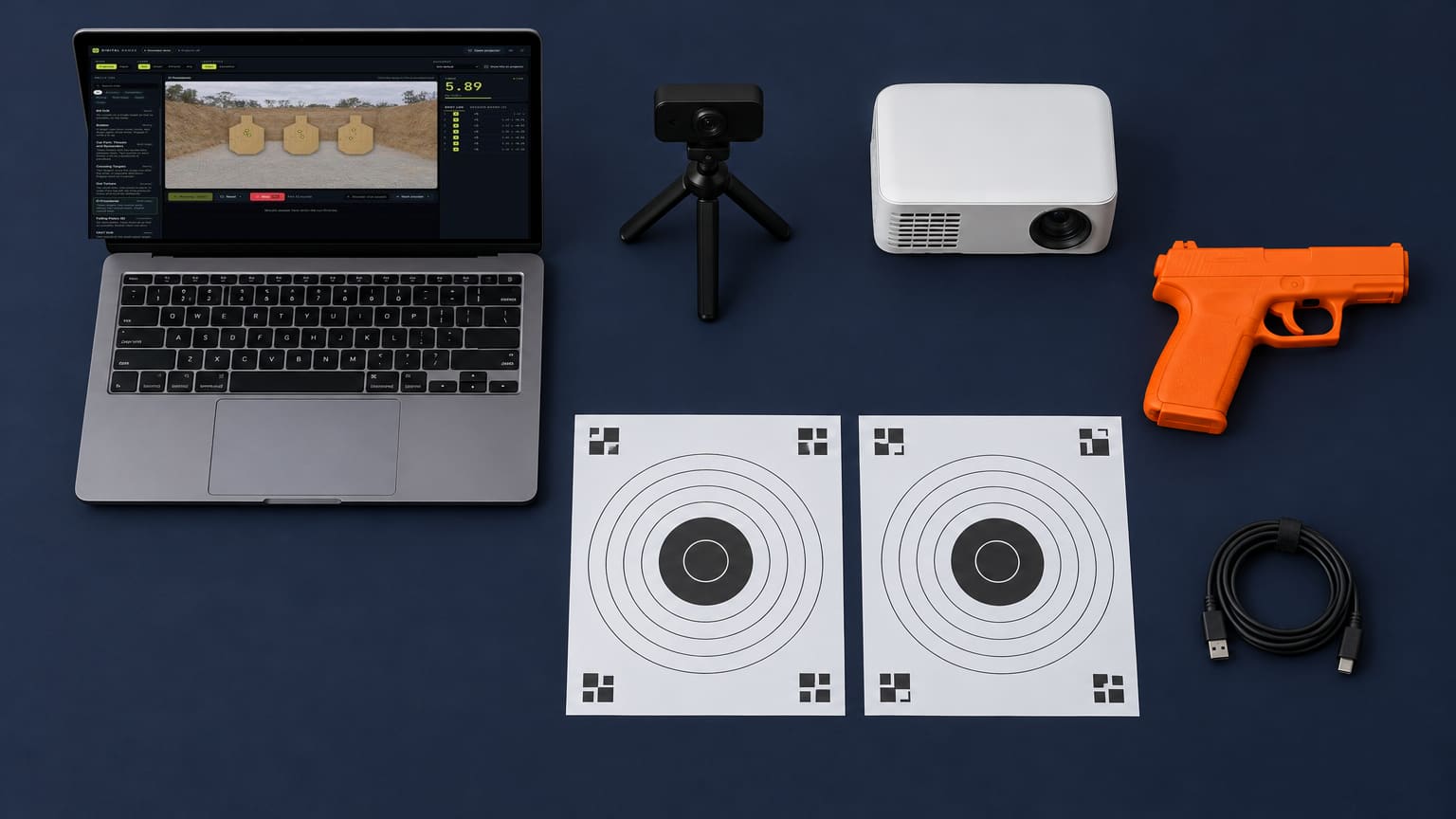
Most shooters get to a live range a few times a month at best. The skills that decide where a round lands fade much faster than that. Grip, trigger press, sight picture and follow-through all need regular repetition, and range days alone rarely give you enough of it.
Dry fire fills that gap. Laser dry fire goes one step further, because it shows you where every shot would have gone.
What plain dry fire misses
Traditional dry fire with a training firearm is useful. You watch the front sight as you press, and you try to keep it still as the shot breaks. The trouble is that you are marking your own homework. You think the sight stayed on target, but nothing confirms it.
A laser training firearm puts a mark on the target the instant you press. If your trigger press pulls the muzzle low and left, you see it. If your second shot comes before the sights settle, you see that too. The feedback is immediate and it is honest.
What a laser range adds
A camera watching the target turns that laser mark into a scored hit. On Digital Range each shot is caught on the flash of the laser, so a held beam never counts twice, and every hit is scored in the right zone of the right target. Misses are recorded, not quietly dropped.
Add a shot timer and the session changes. You get a start beep, a par time and a split for every shot, with first-shot time for draw and reaction work. Now you are not just practising a press. You are practising a press against a clock, the way you will meet it on the line.
Skills that transfer well
Laser practice is strongest on the parts of shooting that happen before the round would leave the barrel:
- Trigger control. A smooth press that does not disturb the sights.
- Sight alignment and sight picture. Holding the sights where they need to be as the shot breaks.
- Target transitions. Moving the eyes to the next target first, then bringing the sights with them.
- Reloads and malfunction clearance. The Reload Drill and Malfunction Clearance drill time how long you take from a spoken cue to the next shot.
- Decision making. Threat and no-shoot targets in the same scene make you think before you press.
What it cannot give you is recoil, muzzle blast or the full weight of a loaded firearm. Recoil management and follow-through under recoil still have to be built with live fire.
Laser training supports live fire
Treat laser practice as the homework between lessons. It keeps the basics sharp so your live rounds are spent refining, not relearning. It does not replace supervised live-fire practice with a qualified instructor, and it does not count toward any licence or qualification.
If you are not yet shooting under supervision, a club is the place to start. Asset Firearm and Crossbow Club runs supervised shooting with qualified instructors.
Keep it short and keep it honest
A good laser session is short and focused. Ten or fifteen minutes on one skill beats an hour of shooting at whatever is on screen. Pick a drill, shoot it several times, and look at where the shots went before you change anything.
Start with something slow, such as Single Target: Slow Fire or the Five-Shot Group, and only add speed once the hits are where you want them. When you do add speed, the Bill Drill gives you six rounds on one target against a 2.5 second par, which shows very quickly whether your press holds up when you hurry.
Digital Range keeps no shooter data. There are no accounts, no names and no history, and results stay on screen only until the app closes. If you want to track your progress, write your times and scores in a notebook after each session.
Safety still applies
Use laser training firearms only. Never bring a live firearm or ammunition anywhere near the setup. Keep your finger off the trigger until you are on target, keep the muzzle pointed in a safe direction, and follow your club's safety rules and range standing orders. Laser training firearms are still subject to your state's laws, so check the rules that apply to you.
To see how the system turns a laser mark into a score, read how a projected laser range works, or browse the drill library to plan your first session.